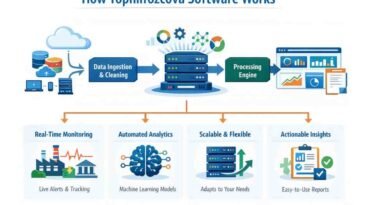

PLFTiger Framework for Adaptive AI and Digital Security
PLFTiger is an emerging digital framework designed to secure, automate and adapt modern systems in an era where traditional technology stacks are no longer enough. Built around intelligent automation, decentralized trust and advanced security models, it reflects a shift away from reactive software toward systems that learn, predict and protect in real time.
As organizations face growing cyber risks, data privacy concerns, and infrastructure complexity, PLFTiger positions itself as a forward-looking solution that brings artificial intelligence, blockchain integrity and distributed computing into a single adaptive ecosystem.
A shift away from fragile digital foundations
For decades, digital systems were built with centralized control at their core. That structure worked when threats were slower and data volumes were manageable. Today, those same foundations struggle under constant attacks, real-time demands and global scale.
PLFTiger emerges from this pressure point. It is not an upgrade to legacy architecture but a rethink of how systems defend themselves, communicate and evolve without constant human intervention.
Instead of waiting for breaches or failures, the framework focuses on anticipation. Intelligence is embedded directly into system behavior, allowing it to identify anomalies early and respond before damage spreads. This proactive stance separates it from conventional cybersecurity and automation tools.
Intelligence designed to learn instead of repeat
At the center of PLFTiger lies adaptive intelligence rather than static rules. Traditional systems rely on predefined logic that becomes outdated as soon as threats change.
Here, learning models continuously analyze behavior, usage patterns and environmental signals. Over time, this allows the system to refine its own responses without being manually reprogrammed.
For example, a financial platform using this framework could recognize subtle shifts in transaction behavior that indicate fraud long before a threshold is crossed. Instead of blocking activity after loss occurs, the system quietly adapts its safeguards as risk patterns evolve.
Security built for a post-quantum future
One of the defining traits of PLFTiger is its approach to security longevity. Many modern encryption methods are effective today but vulnerable to future advances in computing power.
The framework integrates quantum-resistant security models alongside behavioral monitoring. This combination ensures protection is not dependent on a single cryptographic wall.
Data flows are recorded through decentralized ledgers, creating tamper-resistant audit trails. At the same time, access decisions are influenced by behavioral context rather than passwords alone. This layered design creates resilience that adapts as threats grow more sophisticated.
Decentralization as a reliability strategy
Centralized systems fail dramatically when compromised. PLFTiger avoids this risk by distributing intelligence and control across nodes. Each component operates independently yet remains synchronized with the whole. If one node fails or is attacked, others continue functioning without disruption.
This structure is particularly valuable in environments like smart infrastructure or global platforms where downtime is unacceptable. Instead of routing every decision through a central server, the system operates closer to where data is generated, reducing latency and exposure.
Automation that respects human boundaries
Automation often raises concerns about loss of control. PLFTiger approaches automation differently by treating it as an assistant rather than a replacement. Decisions are automated when confidence is high and escalated when ambiguity appears. This balance ensures efficiency without sacrificing oversight.
In healthcare systems, for instance, automated monitoring can flag early warning signs in patient data, while final decisions remain visible and auditable by professionals. The system supports humans instead of sidelining them.
Ethical alignment baked into system behavior
Trust in intelligent systems depends on transparency. PLFTiger incorporates decentralized ethical oversight through auditable decision records and community-defined rules. Actions taken by automated processes can be traced, reviewed, and challenged when necessary.
Rather than relying on internal promises of fairness, the framework allows external verification. This approach aligns with growing demands for explainable AI and responsible technology, especially in sensitive sectors like governance and finance.
Real-world relevance across multiple sectors
PLFTiger is not confined to a single industry. Its modular design allows adaptation across different environments without rewriting core logic. In software development, it enables predictive quality checks that catch issues before deployment. In digital banking, it strengthens fraud detection through behavioral analysis rather than rigid rules.
Smart infrastructure benefits from distributed intelligence that adjusts traffic flows or energy distribution dynamically. Defense and government systems gain secure collaboration without centralized vulnerability. Across these fields, the same principles apply, adaptive intelligence, decentralized trust, and continuous learning.
Interoperability as a practical advantage
Modern systems rarely exist in isolation. PLFTiger is designed to communicate across platforms through flexible integration layers. APIs, automation workflows, and data synchronization tools allow it to fit into existing environments without forcing full replacement.
This interoperability reduces adoption friction. Organizations can start small, applying the framework to a single workflow, then expand as confidence grows. Over time, isolated systems begin to operate as coordinated networks rather than disconnected tools.
Data ownership returning to users
One of the quieter but most important aspects of PLFTiger is its approach to data sovereignty. Users retain control over access permissions through encrypted data vaults. Information is shared only when explicitly authorized, reversing the passive data extraction common in many digital services.
This design aligns with evolving privacy regulations and public expectations. Instead of compliance being an afterthought, it becomes a built-in feature of the system’s architecture.
Challenges that shape realistic adoption
Despite its promise, PLFTiger is not without barriers. Complexity can slow adoption for smaller organizations with limited resources. Regulatory frameworks often lag behind emerging technologies, creating uncertainty around deployment. There is also a learning curve for teams accustomed to centralized control.
These challenges highlight the importance of phased implementation. Early pilots, clear documentation, and open-source collaboration help reduce friction. As tooling matures, accessibility improves, making broader adoption more realistic.
A forward-looking development path
The evolution of PLFTiger points toward increasingly context-aware systems. Future iterations may incorporate emotional and situational awareness, allowing digital platforms to respond more naturally to human needs. Education systems could adapt pacing based on engagement signals, while mental health tools adjust interactions based on stress indicators.
Integration with Web3 infrastructure further extends its reach. Decentralized identity, cross-border verification and global data coordination become more practical when intelligence and trust are distributed rather than centralized.
Open collaboration as a growth engine
A growing ecosystem of developers contributes to PLFTiger through open-source modules and research initiatives. These efforts focus on explainable AI dashboards, lightweight cryptography, and edge-based intelligence. Community participation ensures the framework evolves with real-world feedback rather than theoretical assumptions.
This collaborative model strengthens long-term credibility. Instead of a closed system controlled by a single entity, development remains transparent and adaptable.
Strategic value in an uncertain digital future
As digital systems grow more complex, simplicity in design becomes a strategic advantage. PLFTiger offers clarity through modular structure and consistent principles. Organizations adopting it are not just buying a tool but aligning with a philosophy that prioritizes resilience, transparency and adaptability.
The framework does not promise perfection. Instead, it offers a path toward systems that improve over time rather than degrade under pressure. In a landscape defined by rapid change, that ability may prove more valuable than any single feature.
Conclusion
PLFTiger represents a meaningful shift in how digital systems are designed, secured and trusted. By combining adaptive intelligence, decentralized infrastructure and ethical transparency, it addresses challenges that traditional models struggle to solve.
Its strength lies not in isolated innovation but in thoughtful integration of technologies that learn, protect, and evolve together. As organizations prepare for an increasingly unpredictable digital environment, frameworks built on these principles are likely to define the next generation of secure intelligent systems.
FAQs
Is PLFTiger a real product or more of a technology concept?
Right now it functions more like a framework and direction than a single boxed product. Different teams are building tools and modules around the idea rather than selling one fixed platform.
Who would realistically benefit the most from using PLFTiger?
It makes the most sense for organizations managing complex systems such as finance, healthcare, infrastructure or large digital platforms where security and adaptability really matter.
Does PLFTiger replace existing security and automation tools?
No, it is usually layered on top of existing systems. Most implementations start small and gradually integrate intelligence and decentralization where they add value.
How hard is it to adopt PLFTiger for smaller teams?
Smaller teams may find full adoption challenging at first, mainly due to skills and resources. Many start with limited pilots or open source components to reduce complexity.
Is PLFTiger mainly about cybersecurity or something broader?
Cybersecurity is a core part, but the idea goes beyond that. It also focuses on intelligent decision making, system resilience and long term trust in digital environments.
— End of FAQs —